
EV owners know that Teslas and some other EVs have extra security features which make them very difficult to steal, such as automatic and remote locking, remote location monitoring through the phone app, sentry mode and the option of requiring a PIN to drive. Generally EVs can’t be ‘hot-wired’ as easily and cyber-theft technology using bluetooth that can be used on some other cars is not yet deployed to common EVs such as Teslas.
In fact, the US Highway Loss Data Institute for 2020-22 concluded that Tesla Model 3 and Model Y were the least stolen models in the United States, with theft rates only 3% of the average car population. The Nissan Leaf also experienced markedly lower theft claims than average. In addition, Teslas are more likely to be recovered once stolen due to their remote tracking ability.
In Australia, the National Motor Vehicle Theft Reduction Council (NMVTRC) used to publish data on every vehicle theft reported to the Australian police, and as such was a great but little known resource.
Unfortunately the insurance industry defunded the NMVTRC in 2021, so no data is available after that time, when new EV sales were only starting to accelerate.
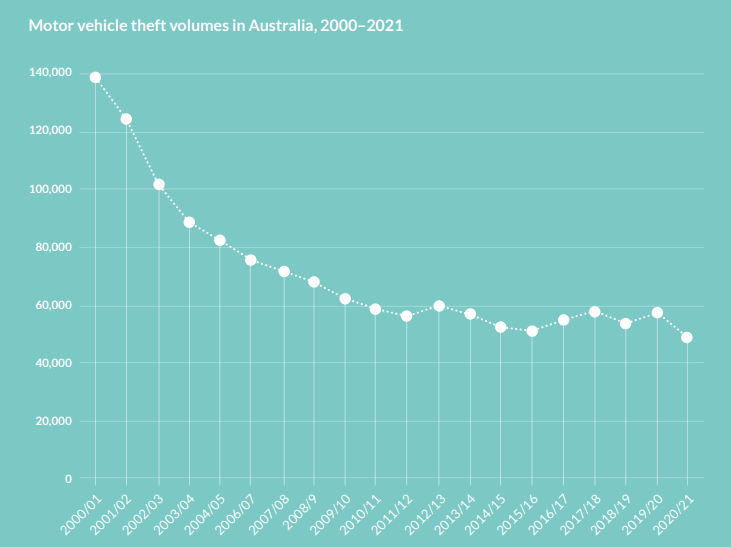
Overall, however, theft is less of a problem in Australia. NMVTRC data show that motor vehicle theft declined markedly between 2000 and 2021.
Electric vehicle crashes: the case of Norway
In one of the few studies of actual accident data focusing on EVs, researchers into accident rates in Norway from 2011 to 2018 found that EV crashes are not statistically different in frequency from ICE crashes. Most EV crashes were in urban areas and on low-speed roadways, which reflects the fact that EVs are more often used for local commuting in Norway. EVs were confirmed to be more likely to be involved in accidents with pedestrians and cyclists, however, presumably due to their quiet operation.
(From Liu et al, European Transport Research Review (2022) 14:6.)